Referal Banner

The Inquisition: A Model For Modern Interrogators
 Enlarge Hulton Archive/Getty Images
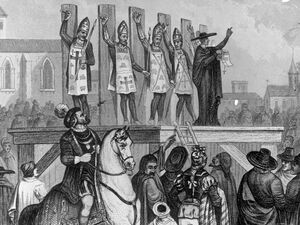
 An illustration shows heretics being tortured and nailed to wooden posts during the first Inquisition.
 Hulton Archive/Getty Images An illustration shows heretics being tortured and nailed to wooden posts during the first Inquisition.
The individuals who participated in the first Inquisition 800 years ago kept detailed records of their activities. Vast archival collections at the Vatican, in France and in Spain contain accounts of torture victims' cries, descriptions of funeral pyres and even meticulous financial records about the price of torture equipment.
"[There are] expense accounts [for things] like how much did the rope cost to tie the hands of the person you burnt at the stake," says writer Cullen Murphy. "The people who were doing interrogations were meticulous."
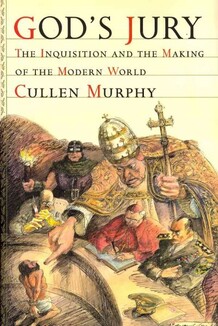
Murphy's new book God's Jury: The Inquisition and the Making of the Modern World traces the history of the Inquisitions — there were several — and draws parallels between some of the interrogation techniques used in previous centuries with the ones used today.
"A few years ago, the intelligence agencies had some transcripts released ... of interrogations that were done at Guantanamo, and the interrogations done by the Inquisition were surprisingly similar and just as detailed," he tells Fresh Air's Terry Gross. "[They were] virtually verbatim."
Eight-hundred years ago, the first Inquisition was initially designed to deal with an upsurge in heretical activity from the Cathars in France. The Cathars' unconventional interpretation of religious doctrine worried Pope Gregory and other Vatican leaders.
"The papacy was trying to centralize itself and assert its authority," says Murphy. "So the pope basically deputizes various clerics. ... They would come to a town, announce that they were there. They would begin to question people. Sometimes they would use harsh methods. ... They would conduct tribunals and they would sentence people to various punishments."
The Inquisition and the Making of the Modern World
by Cullen MurphyHardcover, 310 pages | purchase
close God's JuryThe Inquisition and the Making of the Modern WorldCullen MurphyThe Use Of Torture
Clerics were given authority to use torture in a document issued by the pope in 1252. They were also given advice manuals with instructions for interrogating suspected heretics. Murphy says he was astonished by the similarities between the Inquisitor advice manual and modern-day guides for intelligence agencies and police departments.
"You see that everything that is being suggested now had already been anticipated," he says. "For instance, you want to spook the person you're interrogating. [The Inquisitors] have a whole bunch of tricks they lay out. The person to be interrogated comes into the room and the inquisitor [advice manual advises]: 'Be sitting there. Have a huge stack of documents in front of you. And as the person is answering questions, flip through the documents as if you have more information than this person could dream of. And every so often, shake your head as if you can't believe what they're saying.' It's almost word for word, you find the same thing in modern handbooks."
When Inquisitors needed a confession, they could elevate their interrogations to include torture.
"The basic line here was, 'Has this person confessed or not?' " says Cullen. "The answer is, 'If they confess, it's true. So torture comes into the picture when you need a confession."
But the Inquisitors were aware that confessions given under torture could be problematic, says Murphy.
"If a person confessed to something under torture, the Inquisitors were not prepared to accept that confession as evidence," he says. "They said, 'Now you have to give it some time. Let a day go by. Bring the person someplace else. Then ask them again. And if they still confess, then we'll accept that confession.' But it's not as if the person who made the confession has forgotten the fact that they were just tortured and couldn't be tortured again. [The Inquisitors] were mindful of the flaws of torture, but they went ahead and did it anyway."
 Enlarge Gasper Tringale/Houghton Mifflin Harcourt
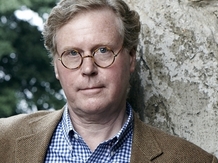
 Cullen Murphy is the editor-at-large for Vanity Fair and previously served as managing editor at The Atlantic Monthly.
 Gasper Tringale/Houghton Mifflin Harcourt Cullen Murphy is the editor-at-large for Vanity Fair and previously served as managing editor at The Atlantic Monthly.
 More Elaborate Forms Of Torture
A century later, during the Spanish Inquisition, interrogators began using more elaborate forms of torture, such as the rack, the pulley and waterboarding. They also began parading their victims through the streets in elaborate displays of punishment.
"You would invite the diplomatic core to come and watch. The nobility would be there," he says. "People would be lined up in the streets to watch everyone going by. If people who were condemned had in fact already died, their bodies would be dug up and they'd be brought by on carts."
The dead bodies were burned on public funeral pyres. The living were publicly tried, and then tortured for several hours. Some were burned at the stake. Others were forced to become galley slaves or returned to prison for more bouts of torture.
"Technically during the Inquisition, there were guidelines in place that said ... you were supposed to torture a person only once," says Murphy. "But if you wanted to torture a person a second time or a third time, there was a way in which you could simply define the second, third or fourth time as simply a continuance of the first time."
On accounts of torturers from the first Inquisition
The idea that the pope would authorize the use of something as heinous as torture by priests or people working for priests is a pretty astonishing development.
- Cullen Murphy"The idea that the pope would authorize the use of something as heinous as torture by priests or people working for priests is a pretty astonishing development. Ultimately, the justification that it invokes is the same one anyone uses when they're using torture for reasons that are not sadistic and that is, in essence: 'The moral cause that we're engaged in is too important to settle for half-measures.' ... When you read accounts of torture, you get the unmistakable impression that the people doing the torture or conducting the torture — somewhere inside them, they think they are saving souls."
On the number of people killed in the first Inquisition
"There were thousands of people who were killed. ... I think the rough ratio [was] for every person burned at the stake, maybe 50 others who were sentenced to something. But then if you factor in the families of those people and the people called as witnesses, you have a great deal of penetration into society. Everybody was aware that this was going on. It's not hard to see why the Inquisition weighs so heavily on the psychology of people at the time."
On the state-run Spanish Inquisition
"The reason for it was that Jews who had converted to Christianity were reverting to Judaism. That was the charge. And the degree to which it was or wasn't true is one of those things historians debate to this day. These charges were leveled at a time when anti-Semitism in Spain was on the increase. There had been terrible pogroms beginning in the 14th century, forced conversions, continual rounding up of Jews into ghettos. The situation was terrible even before the Inquisition began, and once the Inquisition began, it became worse."
"The pope had control over the Medieval Inquisition and over the Inquisition that came later, but the pope had no control over the Spanish Inquisition. As a result, you had the government — the monarchs — presented with this extraordinary tool that they could use for a variety of purposes. ... The Spanish government did not have the welfare of victims in mind. What it did have was the uses it could put prisoners to. And one of the things the monarchy needed was galley slaves [to row ships]. It's probably the worst punishment that can ever be meted out. Your life expectancy was not more than a couple years."
On waterboarding
"Many people in the Bush administration were insisting [it] was not torture at all. The Inquisition was actually very clear on the matter. It obviously was torture. That's why they were using it."
On the printing press and the third Inquisition
"For a long time, the church had had an effective monopoly on the intellectual life in Europe. Publishing was something that involved copying manuscripts. ... Suddenly, there's a new technology on the block. And the church sees this as a threat. So the church sees a combined attack — from the printing press and the Protestant Reformation — [and that] is really the thing that instigates the third Inquisition. ... This is the Inquisition that puts Galileo on trial. ... It's the Inquisition that starts the index of forbidden books."
Author InterviewsSubscribe to Author Interviews podcast via:


Subscribe to NPR Book Notes podcast via:

Consent of the Networked investigates how to keep the Internet and democracy compatible.

A new book, Where the Conflict Really Lies, argues that religion and science share common ground.

In her 20th work of fiction, Penelope Lively explores how our lives are determined by chance.


Geoengineered Food? Climate Fix Could Boost Crop Yields, But With Risks
 Enlarge iStockphoto
 Altering the upper atmosphere could block enough sunlight to offset the warming effects of climate change and protect food crops. But what are the risks?
 iStockphoto Altering the upper atmosphere could block enough sunlight to offset the warming effects of climate change and protect food crops. But what are the risks?
For a few years now, a handful of scientists have been proposing grandiose technological fixes for the world's climate to combat the effects of global warming — schemes called geoengineering.
Climate change has the potential to wreak all kinds of havoc on the planet, including the food system. Scientists predict that two variables farmers depend on heavily — temperature and precipitation — are already changing and affecting food production in some arid parts of the world where there isn't a lot of room for error. And if the problem worsens on a larger scale, it could do a lot of damage to agricultural yields and food security.
At some point, governments may decide "to do something desperate to protect our food and our people," Ken Caldeira, an environmental scientist at Stanford University, tells The Salt. And that "something desperate" could be geoengineering.
One proposal scientists are batting around is to fill the upper atmosphere with tiny particles that could scatter sunlight before it reaches, and warms, the Earth's surface. Sulfate droplets inside volcanic ash clouds already do this naturally. So the idea is that a few million tons of sulfates, sprayed into the stratosphere by airplanes, could produce the same effect artificially.
Scientists have been messing with local weather for decades. China does it all the time, most infamously during the 2008 Olympics. But around 2006, the notion of doing it on a global scale got more traction, especially when Nobel laureate Paul Crutzen got behind it. A backlash ensued, as many pointed out that tampering with such a complex system was far too risky.
Caldeira began studying geoengineering with the intent of proving that it's a bad idea. But his new research suggests that manipulating the climate could actually produce benefits, at least for food production. For instance: a study from his lab, published Sunday in Nature Climate Change, compares the effect on the global food supply of unmitigated global warming versus geoengineering.
The result? Crop yields of wheat, rice and corn would actually get a boost from geoengineering.
Julia Pongratz, a post-doc researcher, led the study. She used computer climate models to simulate a doubling of carbon dioxide levels in the atmosphere. Plants like CO2, but the models showed that the resulting temperature increase would lead to an overall decrease in crop yields.
When she added the cooling effects of geoengineering, however, the model showed crop yields increasing as much as 20 percent. Without the stress of higher temperatures, plants would be able to take full advantage of the extra CO2.
So, does this mean we should start geoengineering today?
"Definitely not," Pongratz says.
For one thing, her simulation only studied the average global temperature – not the localized effects of geoengineering. Even if the global average remained the same, some regions might get hotter while others get colder. That could cause drastic local or regional changes in climate and weather patterns.
Also, geoengineering wouldn't prevent other harmful effects of higher CO2 levels, such as ocean acidification, she says.
And both of those problems would threaten local food security, especially in areas where people already have trouble getting enough to eat.
Until researchers learn more about the specific consequences of geoengineering, neither Pongratz nor Caldeira is endorsing the idea.
"Tinkering with planetary-scale processes is a very risky business, and one that I think most people would not want to undertake lightly," Caldeira says. "I think it's the sort of thing that people wouldn't consider unless our backs are against the wall.
‘Rockstar’ rocks or otherwise?


Welcome to the Imtiaz Ali brand of Hindi cinema; recall Jab We Met and Love Aajkal… Entertainment that is high on aesthetics and drama which is full of emotions and love. Enter Ranbir Kapoor, the most gifted young star with solo hits and excellent track record; recall Raajneeti, Wake up Sid and Rocket Singh. Add to it Nargis Fakhri, an attractive and fresh foreign face and recall the success of Katrina Kaif and Giselle Montiero. Add to this the last appearance of Shammi Kapoor and fantastic music of A.R.Rehman… you book the tickets in advance, buy pop corns and enter the theater with a high set of expectations.
Rockstar is the story of Jordan or JJ, a small time singer who wants to make it big on the rock music scene and his love story with Heer, the classy girl from the same college. It’s a tenderly told anecdote of complexities of human nature and its frailties when it comes to choosing between wrong and right or love and celebrity-hood. Interestingly, at no point, unlike other love stories, Imtiaz wants the audience to portray high moral values of the lead pair. In fact, they have imperfect personalities resulting into a flawed relationship with no possible explanation and that’s what makes the whole deal realistic. It is packed with some power house performances by the lead characters and some beautifully crafted scenes like the one where Jordan leaves his contracts and is found sitting among prostitutes in a red light area singing to them and says that’s what he always wanted. One of the strongest points of the film is the fact that music has been artistically entrenched in the story and last but not the least, humor is genuine and amusing.
But the question still remains; does it deliver as per the expectations? And the answer is no. Have a look at a few primary aspects of the films success or failure, whichever side you take up.
Imtiaz Ali’s experiment with Nargis Fakhri has fallen flat. Nargis has serious dialogue delivery issues and goes over the top on quite a few occasions which are not among the many traits of Imtiaz Ali film.Also, she is almost 33 and shows when she is playing a college student etc. Female lead of the film being unsuitable is surely a problem.However, the rise of the exceedingly charming Aditi Rao Hyadri in supporting cast saves the female side of the show. She is natural, beautiful and has excellent screen presence. All the more reason to look for her pairing with Ali Zafar in London, Paris, New York as her next.Piyush Mishra does an incredible job that one expects from a man of his standard. Other supporting cast is also appreciable, especially Kumud Mishra as JJ’s agent. Shammi Kapoor has a brief but unforgettable role. Graceful, respectable and heart warming.Honestly, the film totally belongs to Ranbir, and what an absolutely wonderful performance. Just a couple of years in the industry and he is already in a league of his own, much ahead of Imran or others. I hate to admit that he is even better than my personal favorite Shahid Kapoor and his results are also showing the same. It was a complex role but the ease with which Ranbir has carried it can give Aamir Khan run for his money. The image and persona of a rock star fit Ranbir perfectly and he pulled off the attitude and music in style. Champion, I’d say. Impressive.
One more impressive unit member is Anil Mehta behind the lens. An absolutely fantastic camera work from the true veteran. He has bettered his previous best Lagaan and HDDS by a huge margin. Light treatments in on-stage performance scenes are remarkable. Close-ups are detail oriented.
Despite the points mentioned above, it still is a beautiful film and worth a watch. In most likelihood, it’s the kind of film that will grow on the audience in multiple watches and has in it to become a long run cult classic. On a stand alone basis, its much better than several films produced this year. From Imtiaz’s perspective, it’s more like his directorial debut film Socha Na Tha that despite being a beautiful film lacked the excitement. Imtiaz’s next should be a step further not backward.
—————————————————————————————————————————————–
 Loading ...
—————————————————————————————————————————————–
Could A Club Drug Offer 'Almost Immediate' Relief From Depression?
Ketamine has been used as an anesthetic for decades. It's also a widely popular but illegal club drug known as "Special K." When administered in low doses, patients report a rapid reduction in depression symptoms.
There's no quick fix for severe depression.
Although antidepressants like Prozac have been around since the 1970s, they usually take weeks to make a difference. And for up to 40 percent of patients, they simply don't work.
As a result, there are limited options when patients show up in an emergency room with suicidal depression.
The doctors and nurses at Ben Taub General Hospital in Houston say they see this problem every day.
You can get a sense of what they're up against by visiting the cavernous, bustling emergency center at Ben Taub, which is part of the massive Texas Medical Center. More than 100,000 patients a year get emergency care here and about 5,000 of them need psychiatric evaluation.
 Enlarge Ben Taub General Hospital
 Ben Taub General Hospital in Houston sees 100,000 emergency patients a year, 5,000 of whom need psychiatric evaluation.
 Ben Taub General Hospital Ben Taub General Hospital in Houston sees 100,000 emergency patients a year, 5,000 of whom need psychiatric evaluation.
 The hospital's 24-hour Psychiatric Emergency Center gets a steady stream of people with suicidal depression, says Charlzta McMurray-Horton, who is in charge of mental health nursing.
"If the police bring them in, they're going to come through this door," McMurray-Horton says, pointing to one entrance. "If the ambulance brings them in, they're going to come through this door," she says, pointing to a different entrance.
And one of the challenges in treating these severely depressed patients is that there simply isn't any drug that provides quick relief, says Anu Matorin, medical director of the Psychiatric Emergency Center.
Matorin talks about one recent patient. The woman had suffered bouts of depression since college, Matorin says. But after she had a baby, it became severe. She stopped eating and sleeping. She began to think about suicide.
Finally, the woman made a desperate call to her mother, Matorin says.
"She was very emotional, very tearful, not making sense," Matorin says. "She says, 'I just can't take it anymore. I don't know how to feed the child.' The mother could hear the infant crying in the background."
The family called 9-1-1 and the woman arrived at the hospital with a police escort. Matorin says she evaluated the woman and put her on antidepressants.
Then came the hard part, Matorin says. She knew the drugs might help the woman eventually. But they weren't going to do anything about her suicidal thoughts during the next few critical days.
So Matorin did the only thing she could for her patient. She admitted her to the hospital's locked inpatient unit.
I ask to see the facility, so McMurray Horton takes me there.
'Keep Them Safe, Keep Them Alive'
The unit can handle 20 patients, and its main room is warmer, softer and more colorful than you might expect. Think Holiday Inn, without any sharp objects or hard edges.
But there's no avoiding the fact that this is a place where safety is paramount and privacy isn't, says McMurray-Horton. Shatterproof plastic windows around the nurses' station provide unobstructed sight-lines to pretty much everywhere.
"Patients don't want to be here," says McMurray-Horton, explaining that about three-quarters of them are in the unit because they have been deemed a threat to themselves or someone else.
So it's not surprising that our tour of the unit is interrupted by the loud protests of one enraged patient.
Units like this are necessary in part because drugs for depression don't work fast enough to help someone in the early days of a crisis, Matorin says.
And McMurray-Horton says staff members here have a simple goal for patients in crisis: "Keep them safe, keep them alive until they're in a different space."
Counseling can help, McMurray-Horton says. So can family. And she says most people in crisis just start to feel better after a few days in a place where staff make sure that "they stay in and the world stays out."
That was certainly true of the depressed young mother that Matorin admitted. She got better and went home several days later.
But that woman probably could have skipped the hospital stay altogether if the drugs used to treat depression were as quick and effective as, say, painkillers, Matorin says.
If drugs were more effective, "I think it would transform psychiatric care and really eliminate some of the stigma and fear and concern about treatment," she says.
'A Completely Different Mechanism'
A growing number of scientists think it won't be long before psychiatric care is transformed.
Traditional antidepressants like Prozac work on a group of chemical messengers in the brain called the serotonin system. Researchers once thought that a lack of serotonin was the cause of depression, and that these drugs worked simply by boosting serotonin levels.
Recent research suggests a more complicated explanation. Serotonin drugs work by stimulating the birth of new neurons, which eventually form new connections in the brain. But creating new neurons takes time — a few weeks, at least — which is thought to explain the delay in responding to antidepressant medications.
Ketamine, in contrast, activates a different chemical system in the brain – the glutamate system. Researcher Ron Duman at Yale believes that ketamine rapidly increases the communication among existing neurons by creating new connections. This is a quicker process than waiting for new neurons to form and accomplishes the same goal of enhancing brain circuit activity.
To study how ketamine might work, Duman turned to rats. The first image below shows the neuron of a rat that has received no ketamine treatment. The small bumps and spots on the side of the neuron are budding connections between neurons.
 Enlarge Ronald Duman/Yale University
Just hours after giving the rats doses of ketamine, Duman saw a dramatic increase in the number of new connections between brain cells. This increase in neuronal connectivity is thought to relieve depression.
 Enlarge Ronald Duman/Yale University
And they are particularly excited about an experimental drug that's being tried over in the NeuroPsychiatric Center next to Ben Taub Hospital.
It's here that drug researchers are studying a drug that's unlike anything now used to treat depression. And they're giving it to patients who haven't done well on existing drugs.
One of these patients is Heather Merrill, who speaks to me in a small conference room that's part of the large and very busy outpatient clinic.
Merill is 41, with three kids and nice house in the suburbs.
"I've suffered from depression for most of my adult life," she says. "It got to the point where I kind of felt like there wasn't going to be anything that was going to be able to help me."
At times her depression gets so bad she can't take care of her family or even herself, she says. And that's how she was feeling the day before, she says, when doctors placed an IV in her arm and began to administer a drug.
Because it was part of an experiment, there were two possibilities. The drug could have been just a sedative. Or it might have been something called ketamine.
Ketamine has been used for decades as an anesthetic. It's also become a wildly popular but illegal club drug known as "Special K."
Mental health researchers got interested in ketamine because of reports that it could make depression vanish almost instantly.
In contrast, drugs like Prozac take weeks or even months. And the frustrating thing is that depression medications really haven't changed much since Prozac arrived in the 1970s, says Sanjay Mathew from Baylor College of Medicine, who is in charge of the ketamine study at Ben Taub.
"Everything since then has been essentially incremental," he says. "There have been tweaks of existing molecules."
But ketamine represents much more than a tweak, Mathews says.
"It's a completely different mechanism," he says. "And the focus is on really rapidly helping someone get out of a depressive episode."
'No More Fogginess. No More Heaviness'
Heather Merrill says she's pretty sure it was ketamine that flowed into her veins 24 hours earlier.
"It was almost immediate, the sense of calmness and relaxation," she says.
Some of the doctors think she might be right.
"Her demeanor has changed tremendously," says Dr. Asim Shah, who directs the mood disorder program at Ben Taub. "She looks like a happy person who is genuinely happy, whereas before the study, she looked very down, very withdrawn, sort of almost tearful."
But of course, nobody knows whether Merrill actually got ketamine. That information will be kept secret until the study is done, months from now.
So I decide to see how Merrill's experience compares with those of people who definitely took ketamine for depression.
I talk to Carlos Zarate, who does ketamine research at the NIH and has never met Merrill. Zarate says patients typically say, "'I feel that something's lifted or feel that I've never been depressed in my life. I feel I can work. I feel I can contribute to society.' And it was a different experience from feeling high. This was feeling that something has been removed."
I compare this to what Heather Merrill said about her experience: "No more fogginess. No more heaviness. I feel like I'm a clean slate right now. I want to go home and see friends or, you know, go to the grocery store and cook the family dinner."
The similarities are hard to ignore.
And researchers say the consistent patient reactions have actually made it more difficult to do good studies of ketamine. The drug's effects are so powerful and distinctive, they say, it's hard to prevent doctors and patients in an experiment from figuring out who got the drug and who didn't.
Snow Patrol On World Cafe
 Enlarge Courtesy of the artist.
 Snow Patrol's newest album is titled Fallen Empires.
 Courtesy of the artist. Snow Patrol's newest album is titled Fallen Empires."Called Out In The Dark""Lifening""New York""Chocolate"
Blending melodic, powerful, guitar-driven indie rock with hook-filled pop and Coldplay-style balladry, Scottish band Snow Patrol has become an international sensation with heavy touring, chart-topping albums and beautiful singles. In 2003, Final Straw vaulted the group onto the international music scene. Snow Patrol released Eyes Open in 2006; that collection features the hit "Chasing Cars" and, with millions of albums sold, solidified the band's reputation for anthemic rock.
Just this month, Snow Patrol released its sixth full-length, Fallen Empires. It represents a move away from melancholic, epic rock, both in terms of lyrics and topics. The album features gospel influences in the form of Lissie and the Inner City Mass Choir, as well as inspiration from Arcade Fire and U2. Singer Gary Lightbody explains the album's club beats and electronic guitar riffs, saying, "There's been very little master plan. We allow things to happen as much by accident as by deliberate intention."
Here, Snow Patrol plays live and discusses the new album.
South Carolina Primary: Join Us For Live Updates
 Enlarge Mladen Antonov /AFP/Getty Images
 A polling station in Columbia, S.C., earlier today (Jan. 21, 2012).
 Mladen Antonov /AFP/Getty Images A polling station in Columbia, S.C., earlier today (Jan. 21, 2012).
The third major contest of the 2012 Republican presidential campaign is being held today in South Carolina and as we did during the Iowa caucuses and New Hampshire primary, we're live blogging as the news comes in.
Polls are scheduled to close in the state at 7 p.m. ET. Starting around 6 p.m. ET, you should be able to follow our latest updates right on the NPR.org homefront. They'll flow in automatically. Or, go here to see all our posts.
NPR will also be broadcasting, and streaming, special coverage of the results from South Carolina, starting at 7 p.m. ET.
Local gold zooms to Rs48,514
The (Un)usual Suspect: Why Organic Spices Aren't Always Safe
 Enlarge iStockphoto.com
 These celery seeds look safe, but could be tainted. Even if they're organic.
 iStockphoto.com These celery seeds look safe, but could be tainted. Even if they're organic.
 June Jones, a hairdresser in Tacoma, Wash., decided to concoct a salt-free seasoning after one of her clients complained that the salt substitutes on the market tasted terrible.
But now Jones's signature product, Jones Mock Salt, has been recalled due to possible contamination with Salmonella.
That recall really got our attention. How could salt be contaminated with Salmonella?
If your blog's named The Salt, you've just got to find out. So we dug into the story, and found that it's due to a collision of two distressing trends: contamination of herbs and spices, and safety issues with organic products.
One of the ingredients in Jones's secret recipe is organic celery seed. And that's the source of the trouble.
Over the past few months Safeway and other big retailers have recalled organic celery seed because a batch of the seeds tested positive for Salmonella, which can cause fatal infections. No illnesses have been reported, but the suspect seeds were distributed from last May through December.
Recalls and outbreaks caused by contaminated herbs and spices are not uncommon. Hundreds of people in 44 states fell ill with salmonella in 2009 and 2010 after eating Italian-style sausage. The culprit was red and black pepper used to season the meat.
We called up June Jones to find out what went wrong. "My supplier actually sent to me a recall letter," she said. "I pulled everything off the shelves in December, and recalled online orders. It's very hard."
Her business will survive, she says, but she has taken a big hit financially. And she's worried because most of her customers use salt substitute because they have health problems.
"It was very disturbing to me. I supply to a heart transplant patient in Minnesota," Jones says. "I take every precaution myself as a manufacturer to make sure my product is totally safe, and I expect other people do that, too."
Because spices can be contaminated with bacteria and insects, big retailers routinely irradiate spices to kill pathogens. (Here's our recent post explaining why spices are irradiated.)
We asked Jones if the celery seed she bought was irradiated. "Irradiated? I didn't ask about that. I made my product from products that are supposed to be safe."
So we called up her supplier, Starwest Botanicals of Rancho Cordova, Calif. Lisa O'Keeley, the customer service supervisor, told us that the firm had found out about the contamination after a manufacturer using Starwest's seeds tested a batch and found Salmonella.
"Typically all of our products get run through a full gamut of testing by our quality assurance department," O'Keeley told The Salt. "When that product was approved, there was no evidence of salmonella at the time."
The seeds in question came from Egypt, which also happens to be the source of the tainted fenugreek seeds that were linked to the E. coli outbreak in sprouts in Germany last year.
O'Keeley says her Egyptian seeds were given an organic certification by an outside inspector. "We have very strict guidelines on what we can call certified organic. "
Were the seeds irradiated? "We won't purvey irradiated herbs," Keeley said. "Even if it's not organic, we don't."
But organic certification doesn't measure food safety; it's only about how a food was grown. Recalls of organic tomatoes, lettuce, and other produce for contamination with salmonella and other deadly pathogens are, alas, common.
Organic foods have even spread botulism — like the Italian stuffed olives we covered last year.
"Consumers think organic is safer," says Doug Powell, a professor of food safety at Kansas State University, adding, "It's just a word. It really doesn't mean much aside from how it was grown." In other words, a food that's grown free of pesticides isn't also necessarily free of pathogens.
He should know; he researches outbreaks and covers them on BarfBlog, a go-to source on all things icky in food safety.
He doesn't have much sympathy for June Jones's situation, particularly since there's been an explosion of small food producers like her in recent years. "If you're going to sell to the public, you'd better know what you're selling. Whether she thinks she's part of the industry or just a small little producer, it doesn't matter. You make people barf, they're going to come after you."
(Health Section) Dunya ma nisf istqaat hamal ghair mehfooz

 Important Searches for this article: Dunya , nisf , istqaat , hamal , ghair , mehfoozSorry, I could not read the content fromt this page.
Hawaii-Based Marine In Hazing Case Goes To Trial
KANEOHE BAY, Hawaii (AP) — A Hawaii-based lance corporal accused of hazing a fellow Marine who committed suicide at their remote outpost in Afghanistan will appear in court after agreeing to a plea bargain.
Lance Cpl. Jacob D. Jacoby has been charged with assaulting, threatening, and humiliating Lance Cpl. Harry Lew, who killed himself on April 3.
Jacoby was referred to a general court-martial, but he will instead appear in a special court martial — which handles less serious crimes — at a Marine base in Hawaii on Monday after reaching a plea agreement.
Two other Marines have also been accused of hazing Lew and face courts-martial.
Sgt. Benjamin Johns, the leader of the squad the Marines belonged to, and Lance Cpl. Carlos Orozco III will each have their own separate courts-martial at later dates.

The casino says it will keep service fresh. Others say it's taking advantage of a tough job market.

N.Y. Gov. Andrew Cuomo and Mayor Bloomberg disagree over whether food stamp users should be printed.
How 'Space Weather' Affects Planes And Power Grids
This week solar flares sent a huge blast of X-rays and charged particles screaming towards the Earth. Solar astronomer David Hathaway and physicist Doug Biesecker discuss the sun's explosive behavior, and how that 'space weather' affects satellites, airplanes and the electric grid.
Copyright © 2012 National Public Radio®. For personal, noncommercial use only. See Terms of Use. For other uses, prior permission required.IRA FLATOW, HOST:
You've probably heard the news earlier this week. There was an explosion on the surface of the sun, a solar flare, and because we at SCIENCE FRIDAY want to know how everything works and why, we're calling in a couple of experts to explain the ABCs of a solar storm and actually how the sun works.
How good are we at predicting these solar explosions? What effects can they have on the Earth? Are there still some unsolved mysteries about the sun and how it works? Let me introduce my guests. David Hathaway is a solar astronomer at NASA's Marshall Space Flight Center in Huntsville, Alabama. Welcome back to SCIENCE FRIDAY, Dr. Hathaway.
DAVID H. HATHAWAY: Thank you, Ira.
FLATOW: You're welcome. Doug Biesecker is a physicist at NOAA's Space Weather Prediction Center in Boulder. He joins us from radio station KGNU in Boulder. Welcome to SCIENCE FRIDAY, Dr. Biesecker.
DOUG BIESECKER: Thanks for having me on the show, Ira.
FLATOW: You're welcome. David, can you give us a play-by-play of what happened there on the sun this week?
HATHAWAY: Yeah, it starts with a flash, a solar flare that we see particularly in X-rays from the sun. The sun gets 100 to 1,000 times brighter than normal in X-rays from the sunspot region. With that - we saw that, of course, in the time it takes light to get from the sun, so eight and a half minutes or so.
Within an hour we saw radiation from it. This is energetic, subatomic particles, electrons and protons and so forth, and that built up pretty steadily and stayed high for days. That whole explosion, it's a magnetic explosion on the sun, launched what we called a coronal mass ejection.
This is literally a billion tons of matter moving at a million miles an hour, streaming through the solar system, and it was aimed pretty much right at us. That hit us a couple days later and produced some spectacular auroral arrays.
FLATOW: And is it going on still? Is there still activity going on?
HATHAWAY: Well, it's interesting you should ask. That one has since calmed down, but we are at this moment in the midst of an even bigger flare as far as X-rays, but it's off the edge of the sun, so we're not going to get the dramatic fireworks here on Earth from it. But we are at this moment in the midst of an X-ray flare that's even more powerful than the one from a few days ago.
FLATOW: Wow.
BIESECKER: Ira, in addition to that, I just want to point out that the radiation storm is - from that is also in progress.
FLATOW: So we called you at the right time.
HATHAWAY: Indeed.
FLATOW: All right, we're going to - we have a whole bunch of time to talk about it. So 1-800-989-8255 is our number. We're going to talk about this new solar flare that's happening as we speak and bigger than the one that happened earlier this week. You can tweet us @scifri, @-S-C-I-F-R-I, and you can also go to our Facebook page and our website.
So we'll be back talking more about solar flares with David Hathaway and Doug Biesecker. Our number again, 1-800-989-8255. We're in the middle of a big one, and we'll talk about it some more. Stay with us.
(SOUNDBITE OF MUSIC)
FLATOW: You're listening to SCIENCE FRIDAY. I'm Ira Flatow. We're talking about solar astronomy this hour with David Hathaway of NASA's Marshall Space Flight Center, Doug Biesecker at NOAA's Space Weather Prediction Center. Our number, 1-800-989-8255, and we called them up originally to talk about this week's earlier solar flare.
But we find out right now, as we speak, there's an even bigger one happening, although not the one that's pointed at us. It's not going to be hitting the Earth. Is that correct, Doug?
BIESECKER: Right, so the active region, these regions of intense magnetic field that produce flares and give us the coronal mass ejections, the same region that gave us the activity earlier in the week has rotated in the five-day sense to where it's now seen at the edge of the sun.
And so the coronal mass ejection associated with this big flare is headed off away from Earth. But even in spite of that, we see the direct X-rays and ultraviolet from the flare, and any radiation being accelerated by the coronal mass ejection can still make its way to Earth, and we're seeing both of those effects in progress.
FLATOW: And what effect would it have on Earth here?
HATHAWAY: Well, the flare, the main effect is an atmospheric one. And the way you might be concerned about that – well, really, you probably wouldn't be - but if you're somebody who uses high-frequency radio to communicate – say, a ham operator, or you're in a ship at sea, or you're even in a plane flying, you know, across the Pacific Ocean right now, you'd find your high-frequency radio probably isn't working because of this solar flare.
The way that works is the signal has to bounce off a layer in the atmosphere known as the ionosphere, and right now the ionosphere is very different from its normal state. And that bounce of the radio signal doesn't happen; it in fact gets absorbed by the atmosphere.
BIESECKER: So HF users - high-frequency users in the Pacific right now are feeling the effects of this solar flare.
FLATOW: Were they warned about this one?
BIESECKER: Well, predicting a solar flare would have happened today at 1:37 Eastern Time. We're not there yet. What we do is we look at these regions of intense magnetic field, the sun spots, how many of them are there, how complex is the magnetic field contained within, how big is it.
And from that we can compute our probability. So much like you might hear 40 percent chance of rain tomorrow, we can also say, you know, 60 percent chance of solar flares tomorrow.
FLATOW: So people in that area that you're saying, pilots, whatever, who are flying, they may be having trouble and not knowing why but probably predicting, uh-oh, another solar flare.
BIESECKER: That's exactly right. But they have a workaround. As long as they can see those communication satellites that sit over the equator in geostationary orbit, 22,000 miles above the surface of the Earth, they can switch to that sat-com and still get the signal through.
FLATOW: David Hathaway, what is it on the sun that causes this thing to happen? What's going on in the internal workings of the sun?
HATHAWAY: It's magnetism, pure and simple, that - it's magnetic fields involved in all of this. It's magnetic fields that make the sunspots themselves, that within the sun the flow of these ionized, electrically charged gases produces intense magnetic fields, and in some spots it gets to be, you know, thousands of times stronger than the Earth's own magnetic field, strong enough that in fact it chokes off the flow of heat from inside the sun, which is why sunspots appear dark.
But those magnetic fields can get twisted out of shape and basically short-circuit by reconnecting, and all that magnetic energy gets released explosively. And so that's where it ultimately comes from, is magnetism ultimately produced inside the sun that we see manifest at the surface in sunspots and above the surface in coronal features, these loops where the gases in the sun's hot corona are confined, move along these magnetic loops above the surface.
And so we can see the presence of the magnetic fields there. But it's - again, magnetism's the key to it all.
FLATOW: Speaking of magnetism, does our Earth's magnetic field that surrounds it, does it protect us from any of these things?
HATHAWAY: Very much so, yeah, that the Earth's own magnetic field would normally look like a bar magnet's magnetic field, what we call a dipole field, going into the North, coming out of the South. But because it's also subjected to the solar wind that blows off of the sun at a million miles an hour, that solar wind drapes the Earth's magnetic field into a comet-like structure, a tail.
So it pushes the magnetic field on the day side closer to the Earth, and it stretches it out on the night side into a long tail in back of the Earth. So that magnetic field does protect us from charged particles, but it's - it can also get disrupted by the magnetic fields in these coronal mass ejections that when this magnetic explosion goes off, the coronal mass ejection that's produced has magnetic field, is a key part of it, and that magnetic field, once it hits the Earth, if it's directed in the opposite way, if it's directed from north to south instead of south to north, it can produce reconnections in the Earth's magnetic field that ultimately lead to energetic particles, electrons and protons, streaming back along the Earth's magnetic field line into the atmosphere and producing the aurora.
FLATOW: Wow, that's terrific. Doug, did you want to jump in there?
BIESECKER: Well, I was going to say in addition to the aurora, when the coronal mass ejection slams into the Earth's magnetic field, that magnetic field that does protect us from the radiation storm, that changing magnetic field causes problems for customers.
That's why the Space Weather Prediction Center is monitoring the sun 24 hours a day to provide forecasts and get out those official watches, warnings and alerts to customers, because when that coronal mass ejection hits the Earth, currents are being induced into the power grid.
So the power system operators, with as little as 15 minutes of warning, can protect their systems by making sure they have sufficient capacity to handle the extra currents, to have people in place to turn off a transformer if it starts to overhead. So it's something industry can respond to. They just need to have the watches, warnings and alerts to make sure they're able to.
FLATOW: Now, this one, if I heard you correctly, started less than an hour ago, and...
BIESECKER: That's right, and...
FLATOW: And so you weren't really able to get out - your prediction is at what stage, compared to, let's say, weather forecasting? What stage are you at at predicting?
BIESECKER: Well, I think the canonical thing people use is we're about 30 to 50 years behind weather forecasting. There are certain things where we're much better than that. With a coronal mass ejection we can observe them back at the sun, and then we can predict with in fact a numerical model that we introduced on the Weather Service supercomputer just a couple of months ago, we can use that to predict when this coronal mass ejection would arrive at Earth.
And the storm that erupted on Sunday, January 22, erupting at 11:00 p.m. Eastern Time, slammed into the Earth at 10:00 a.m. Tuesday, within an hour of when it was predicted.
FLATOW: And the one that's predicted less than - it started an hour ago, when is that going to slam into the Earth?
BIESECKER: Well, that's - the early indications are that, in fact, it won't. Because the active region has rotated away from an unfavorable position, that coronal mass ejection is going to fly harmlessly off into space, maybe hitting a science satellite or two on the way.
FLATOW: I think a lot of people don't realize that the sun actually rotates.
BIESECKER: Yeah, the sun...
FLATOW: It spins on its own axis, yeah.
BIESECKER: Every 27 days on average, and because of that rotation - and I'm going to give Dave the opportunity to jump in here and talk about why that's significant - lots of very - that's one of the reasons why the sun is so interesting, and we have a solar cycle.
HATHAWAY: Yeah, part of it is that it - because it's a ball of gas, it doesn't have to rotate like a solid ball. In fact, it doesn't. At the equator, it rotates once in about 24 days. If you get near the poles, it takes about 35 days. And so that produces a sheering motion that things get stretched out and wrapped around the sun because of it, things like magnetic fields in particular, and that's in fact a key part of how the magnetic fields are generated and maintained within the sun, is - this is what we call differential rotation, the fact that the equator is rotating faster than the poles.
There's a sheer layer near the surface that as you start at the surface and move inward, it - the rotation speeds up, then stays constant through, you know, 100,000 miles or so and then changes again at a layer about a quarter of the way into the sun.
So that rotation, in fact, is key to producing the magnetic fields.
FLATOW: 1-800-989-8255. Let's go to Virginia in Flint, Michigan. Hi, Virginia.
VIRGINIA: Hi.
FLATOW: Hi there.
VIRGINIA: Fascinating stuff. We've had really warm weather here in Michigan. Is this going to impact weather patterns, like, are we going to have a really hot summer now? Or another question is, is this going to melt the solar - excuse me - melt the icepacks and ozone and all that kind of stuff? I don't know if I've missed some of the answers already. But I'd be interested in how much it's going to melt, you know, the ice that's already melting so fast.
FLATOW: OK, Virginia, thanks for calling. We'll see what we can do.
VIRGINIA: Thank you.
FLATOW: Uh-huh.
DAVID HATHAWAY: Yeah. Those are great questions. The sun does influence climate to some respect, but probably not weather as far as the day-to-day, that even though the sun got 100 times brighter in X-rays, it hardly got brighter at all when you add up all the energy that the sun puts out and the Earth receives. That's a tiny amount, even over the course of a complete sunspot cycle, when you go from no sunspots to, you know, 100 sunspots on the sun and all of that activity; the sun's only about a 10th of percent, one part in 1,000 brighter. And so it's a small change. It has - again, in the long run has a bit of an effect on climate but day-to-day weather probably not.
FLATOW: Here's some questions, a few questions, different questions basically the same theme coming from the Internet, and people want to know how this would affect - a flare like this might affect people in space, either the space station or people - astronauts on their way to Mars or maybe on the moon, things like that.
BIESECKER: Sure. Well, there certainly can be impacts. The astronauts on the International Space Station right now have to be concerned, but in general do they need to be concerned from the activity that's happening right now? Not really. Their action - they would react at very, very large levels of radiation. There's a certain risk that they're willing to accept, a few extra - or a slightly higher risk of cancer as they age. But the systems that they're using can be impacted by a radiation storm.
So you know, with the shuttle, for example, the robot arm couldn't be used when a radiation storm exceeded a certain level. So there are certain impacts they do have to be aware of.
FLATOW: Tell us about this huge solar storm of - the storm of 1859, Doug.
BIESECKER: Well, 1859 was - it's kind of our perfect storm in solar physics. So the day was Thursday, September 1, and Sir Richard Carrington was in his house, at his observatory, watching the sun like he did every day, and he projected this image of the sun with his telescope till it was about 11 inches across. And each day he would draw the sunspots. And this particular day he'd finished drawing the sunspots and he was just about to start measuring the locations on the sun when all of a sudden two bright lights appeared in the middle of one of these magnetic regions he'd measured.
And he'd never seen this before. And he thought, oh, there's something wrong with my equipment, and he checked it out and quickly realized, no, it's not my equipment. And the careful observer that he is, he wrote down the time, 11:20 a.m. He was so shocked by this, he ran off to find somebody to help verify what he was seeing. He couldn't find anybody, came back, and it was already fading. It lasted all of five minutes. By 11:25 a.m., it was done.
FLATOW: Let me just interrupt to say this is SCIENCE FRIDAY from NPR. Talking with Doug Biesecker, spinning a yarn about the solar flare of 1859. Keep going.
BIESECKER: So now he knew something special had happened. And what makes this really remarkable is at a magnetic observatory, again, when you shake the Earth's magnetic field, you know, if you and I had a compass, you know, it would point to solar north. But if you made a compass that was sensitive enough, you would be able to see that that magnetic field was shaking during one of these geomagnetic storms. And in fact, at 4:00 a.m. on September 2nd at the magnetic observatory at Kew Garden, there was a great magnetic storm.
And Carrington said, you know, a swallow doesn't make a summer, but there seems to be a connection here. So in just 17 hours after he saw a flare on the sun, we had a huge, in fact the largest ever recorded, magnetic storm on the surface of the Earth. It was so strong, every magnetic observatory in the world saturated, except for one that we know in India, and all measurements of that storm are now based on that one. Impacts...
FLATOW: And what did - yeah. What did it...
BIESECKER: Right.
FLATOW: Telegraphs and things like that?
BIESECKER: Right. So the technology of the day was telegraphs. So that's really where most of the impacts were. You know, in Pittsburgh the telegraph machines got so hot, the operators couldn't touch them. In Philadelphia, a telegraph operator received a shock from his equipment. In Boston, there was a flame of fire. You know, in telegraph stations up and down the East Coast the wood got scorched, paper burned. What did the average person see? Well, aurora. In Indianapolis the aurora was so bright and so strong, you didn't have to look north to see the aurora.
You could look at your southern horizon and still see the aurora. In Jamaica, it was described as like the light of a fire. It's believed that - well, in fact, it's been recorded that sailors saw it just 12 degrees north of the equator and that if weather conditions had been favorable it would have been seen even at the equator. So the entire globe was able to see the aurora on September 2, 1859.
FLATOW: Wow. Do we know why that happened in such a spectacular fashion? What...
BIESECKER: Well, this particular event was really just the extreme of exactly what happened just this past Sunday. Associated with that solar flare was one of these coronal mass ejections. The speed of the coronal mass ejection doesn't tell you exactly how strong the storm will be. That - for that you need to know the magnetic field in the CME, but it's a pretty good indicator. And that transit of 17 hours is the fastest ever recorded. And the impulse, you know, the amount of energy that got dumped into the Earth's magnetic field was just incredible.
FLATOW: Do we have a number you can put on even a solar flare that just happened this week, how big explosion goes on?
BIESECKER: Off the - no. I don't have a number.
FLATOW: Dave, you got it?
HATHAWAY: Yeah.
BIESECKER: Yeah.
HATHAWAY: The typical flare, if you look at the radiant energy from it, is the equivalent of a million megatons of TNT. So that's the energy equivalent of 10 million Hiroshima bombs.
FLATOW: Wow. All right. We're going to let that sink in for a little bit, take a break. We'll come back more and talk with Doug Biesecker and David Hathaway about the sun and solar events. Our number, 1-800-989-8255. You can tweet us, @scifri. Stay with us. We'll be right back.
(SOUNDBITE OF MUSIC)
FLATOW: This is SCIENCE FRIDAY from NPR. I'm Ira Flatow. We're talking about solar flares and the sun with David Hathaway of NASA's Marshall Space Flight Center in Huntsville, and Doug Biesecker of NOAA's Space Weather Prediction Center in Boulder. And we're going to talk a little - a few more minutes, because I want to recap. If you've just tuned in, there is a big solar flare happening right now in the sun, and maybe we can recap it. David, you want to take a shot at it? Or Doug? Who would like to tell us what's going on there now?
HATHAWAY: Doug is probably better at that. He's on top of it.
FLATOW: OK. Doug, what...
BIESECKER: Sure.
FLATOW: Bring us up to date.
BIESECKER: Right. Well, I was on top of it until I walked into the studio, but what we had on a scale of one to five, we measure space weather, and the solar flare we had last Sunday we measured at two on our solar flare scale, or an R2. The flare we just had is even larger, at the R3 level. Within 20 minutes of that solar flare erupting, we started to see radiation particles at very high energies that are starting to hit the Earth. They - the Space Weather Prediction Center, in our role, of course, put out a warning as soon as the flare began and in fact put out warnings for the radiation storm before the particles even began to arrive.
FLATOW: And that happened today?
BIESECKER: So that's happening right now. So the flare itself is probably practically over.
HATHAWAY: Yeah.
BIESECKER: The radiation storm will continue. It's hard for me to estimate without having seen the data recently how long that will continue. But what that would cause, you know, potential impacts to that - when the radiation levels reach sufficient levels, those same particles that David talked about coming down and hitting the polar regions, causing the aurora, that also causes the high frequency communications outages in the polar regions. And so any airplane flying over there loses their high-frequency radio.
The problem there is they can't see those satellite - communication satellites sitting over the equator, so in fact they have absolutely no way to communicate if they're in the polar regions during one of these storms, which is why it's important that they get the information as quickly as possible, because if they have to divert one of those routes, it's not very cost effective.
FLATOW: David, you want to add anything?
HATHAWAY: No. It's just - I wanted to mention, I am in my office so I can see the data, and the X-rays are well on their way going down, but the energetic particles, protons in particular, are rising rapidly.
FLATOW: Reaching us on Earth?
HATHAWAY: Yes. Yeah. Yeah. These are being measured as we speak at...
BIESECKER: Right.
HATHAWAY: ...satellites and geosynchronous orbit.
FLATOW: And how many - how many watchdog satellites do we have out there?
BIESECKER: Well, for - well, NOAA, those same weather satellites that are taking pictures of the hurricanes...
FLATOW: Right.
BIESECKER: ...we have space weather sensors on those. And in fact the flare and the radiation storm are being measured with instruments on those same weather satellites. But we do leverage assets from NASA, for example; the coronal mass ejection that's associated with this flare, we know it's headed nowhere towards Earth because we've got images of the solar atmosphere from that - from a NASA satellite that show us that that's what's happening. And we also use those data to help forecast when those coronal mass ejections will hit the Earth.
FLATOW: We'll be watching over the next hours, and people will, I guess, listen to SCIENCE FRIDAY will know about it, because this word is coming out, happened within, oh, just a little bit over an hour ago. And thank you, gentlemen, for taking time to alert us.
HATHAWAY: Thank you, Ira, for having us on.
FLATOW: You're welcome. David Hathaway is solar astronomer at NASA's Marshall Space Flight Center in Huntsville, Alabama. And Doug, thank you. Doug Biesecker is physicist at NOAA's Space Weather Prediction Center in Boulder, Colorado.
BIESECKER: Thank you.
FLATOW: You're welcome.
Copyright © 2012 National Public Radio®. All rights reserved. No quotes from the materials contained herein may be used in any media without attribution to National Public Radio. This transcript is provided for personal, noncommercial use only, pursuant to our Terms of Use. Any other use requires NPR's prior permission. Visit our permissions page for further information.NPR transcripts are created on a rush deadline by a contractor for NPR, and accuracy and availability may vary. This text may not be in its final form and may be updated or revised in the future. Please be aware that the authoritative record of NPR's programming is the audio.
(Women Section) HOnton sa lip stick saaf krna

 Important Searches for this article: HOnton , stick , saaf , krnaSorry, I could not read the content fromt this page.
Gardening Map Of Warming U.S. Has Plant Zones Moving North

 U.S. Department of Agriculture The new version of the map includes 13 zones, with the addition for the first time of zones 12 (50-60 degrees F) and 13 (60-70 degrees F).
 It's official: Gardeners and farmers can count on warmer weather. If that's you, it might be a good time to rethink those flower and vegetable beds for this year's growing season.
That's the word from the U.S. Department of Agriculture, which released a new version of its "Plant Hardiness Zone Map" this week, the first update since 1990. The color-coded zones on this map of the United States are widely used as a guide for what perennial flowers will survive in a particular area, or when to plant your vegetables.
Here's how it works: The higher the zone number, the warmer your average low temperature during wintertime.
Now the zones have shifted northward. The new map shows that in much of the country, winters aren't as cold as they used to be, and spring planting comes earlier.
So if you're thinking of planting a White Dogwood tree in your front yard, for instance, you may have read that it will thrive in zones 5-8, which covers most of the southern half of the country.
But if you live in northern Iowa — good news — you can now plant that tree! You are now in zone 5, instead of 4.
Gardeners in Manhattan, Kansas, may also rejoice over new options now that the town has moved from zone 5 to zone 6. The new version of the map also includes two new zones at the warmed end of the spectrum: zone 12 (50-60 degrees Fahrenheit) and 13 (60-70 degrees Fahrenheit).
The nationwide shift in the planting season provoked lots of questions about just how much to attribute to climate change. USDA officials, while introducing their new map to reporters, insisted that they were making no claims about global warming.

 U.S. Department of Agriculture The last iteration of the Plant Hardiness Zone Map, from 1990. In the 2012 map, many zone boundaries have shifted significantly.
Some of the shifting zone boundaries, they said, were the result of more sophisticated mapping. For the first time, the new map takes into account the effects of elevation, large lakes, and whether a place is located in a valley or on top of a ridge. They admitted, however, that most of the changes were due to using temperature data from recent years, which have been relatively toasty.
Unlike previous hardiness maps, the USDA won't sell poster-sized versions of this one. But there's an interactive version, available on the web, where you can explore the map in exquisite detail.
A Pollster's Preview Of The S.C. Primary
Fans get our favorite stories, exclusive videos and real-time messages while we're on the air.
join us
15 Beautiful Triangle Inspired business cards

Business cards are so important when it comes to networking. They provide prospects with our contact info and, more importantly, a lasting impression. Today for your inspiration we have gathered 15 Beautiful Triangle Inspired business cards. These business card would be perfect for an organizer or representative for an arts & music organization. The triangle and diamond motif of the back is edgy and modern, and is a creative way to display photos for upcoming performances and art shows. The purpose of this post is to get people inspired by Triangles and get business card printing done with new concept.


Khalid Janjua is a business owner and entrepreneur from Manchester, United Kingdom. Khalid is currently working on Saturn-Tec, a website which provides design & cheap web solutions. Follow Khalid on Twitter: @hybridlava. Follow the development of @saturntec.